Welcome, Developers! 👋 Rootly enforced a strict small-PR culture for two years. Then AI started writing 80% of their code and the rule became overhead. GitHub got breached through a poisoned VS Code extension that was live for 18 minutes. The Bun JavaScript runtime quietly merged a million-line Rust rewrite of its Zig codebase, with Claude writing almost all of it. Anthropic moved tool execution inside the customer perimeter at Code with Claude London. OpenTofu shipped the feature Terraform never did, a decade after the first request. And a 258-point Show HN turned tokens-per-second into something you can actually feel. |
|
|
From our sponsor: ONLYOFFICE |
|
|
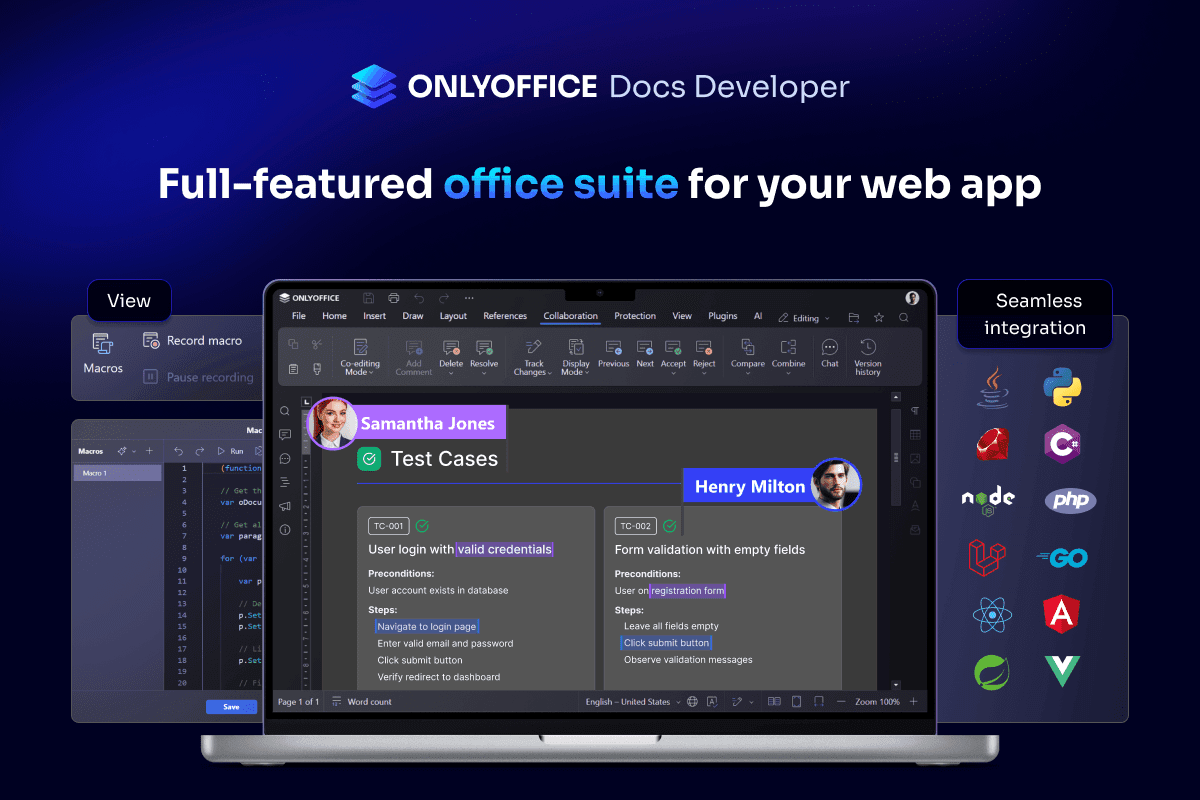 |
Embed Powerful Document Editing in Your Web App ONLYOFFICE Docs Developer lets you seamlessly embed a full suite of document editors directly into your platform. Give users the ultimate in-browser experience with flawless MS Office compatibility for text docs, spreadsheets, presentations, and PDFs.
Out-of-the-box real-time collaboration keeps teams synced. Whether you deploy on-premise or via SaaS, flexible API and WOPI support make integration simple across all popular frameworks. |
| Explore ONLYOFFICE Docs Developer |
|
|
🔖 The Reading Room Articles we have hand-picked for you: |
|
|
Your Small PR Rule Won't Survive AI Two years of strict small-PR culture at Rootly stopped working when AI started writing 80% of their code by count. Humans think in increments. Agents think in features. Stacked PRs of AI output created busywork: the reviewer still needs the full feature to evaluate any single piece, now across five tabs instead of one. What replaced it: an internal AI reviewer that scores risk, standardisation, and confidence; risk labels (low, medium, high) instead of line counts; feature flags as the real review gate. A 12-line PR altering a database index on a 50-million-row table is risk:high. A 3,000-line feature behind a flag, shipping to internal users first, is risk:low. The PR template now requires a Rollback/Revert Plan field as a hard gate. By Quentin Rousseau (CTO & co-founder, Rootly) → |
|
Everything new from the Google I/O 2026 Developer Keynote Useful as a single-page index of what shipped on May 19. Gemini 3.5 Flash went GA with a 1M context window. Antigravity 2.0 added a CLI, an SDK, native voice support, and Managed Agents in the Gemini API. Android got a stable CLI, an Android Bench harness, and an Android migration agent. WebMCP landed as an open standard. HTML-in-Canvas shipped. The demo that anchored the keynote: parallel sub-agents built a small operating system inside Antigravity and then ran Doom on it. Gemini CLI is being folded into Antigravity CLI. Read this once and you have the I/O 2026 surface area in your head. By Google Developers Blog → |
|
Anthropic's Bun Rust rewrite merged at speed of AI Bun, the JavaScript runtime Anthropic acquired last year, just had its Zig codebase swapped for Rust in a single merge of more than a million lines of code. Five days before the merge, Jarred Sumner posted that "99.8% of bun's pre-existing test suite passes on Linux x64 glibc in the rust rewrite." The merged version passes the test suite on all platforms, fixes some memory leaks, and shrinks binary size by 3 to 8 MB. Same architecture, same data structures, no async Rust. A follow-up PR removing 600,000 lines of Zig source was auto-flagged by GitHub as "AI slop" and closed. The keeper quote from Sumner, on whether the new Rust version will be maintained mainly by Claude Code: "this is already the status quo; we haven't been typing code ourselves for many months now." By Tim Anderson (The Register) → |
|
Anthropic moves Claude agents inside the customer perimeter At Code with Claude London on May 19, Anthropic shipped two enterprise-aimed features for Claude Managed Agents: self-hosted sandboxes (public beta) and MCP tunnels (research preview). The split matters. The agent loop (orchestration, context, error recovery) stays on Anthropic. Tool execution moves into your perimeter, either self-hosted or through managed providers Cloudflare, Daytona, Modal, or Vercel. MCP tunnels are the bigger deal for most teams: a lightweight gateway opens a single outbound encrypted connection so Claude can reach private MCP servers without inbound firewall rules or public endpoints. Files and repositories never leave your environment. Works with both Managed Agents and the Messages API. Via The Decoder → |
|
How fast is N tokens per second, really? A single-page interactive tool that renders LLM token throughput in real time, from 5 tok/s up to Cerebras-class 800 tok/s, with three modes: chat, code, and reasoning. Drag the slider and watch what each tier actually feels like, because the difference between 30 and 80 tokens per second is the difference between "agent feels glacial" and "agent feels conversational." The reasoning mode is the eye-opener: thinking models burn 2 to 3x more tokens before any visible output, which is why "fast at 200 tok/s output" still feels slow when you are waiting on a hidden chain-of-thought. Useful next time you are picking between a local model and a frontier API for an agentic workflow. 258 points on Hacker News. By Mike Veerman → |
|
|
|
|
|
|
🔗 The Link Lounge Unordered finds from around the web:
Find something cool? You can send us links to feature here via email. |
|
|
|
|
🧰 The Toolbox Tools and products we're excited about today: |
|
|
Forge An open source reliability layer for self-hosted LLM tool-calling. Built around the compounding-error math problem: 90% per-step accuracy over a 5-step workflow is a 40% failure rate. Forge wraps an 8B local model in structured guardrails and reports moving from 53% to 99% success on the author's agentic benchmarks. Designed for people running always-on agents on their own hardware who do not want to pay frontier API rates. Launched on Show HN on May 20. Learn more → |
|
Bun 1.3.14 The last Zig-based release of Bun shipped May 12 with serious feature work, not a goodbye. Bun.Image lands as a built-in image processing API (the team claims it outperforms sharp). Warm installs are 7x faster via the isolated linker's global virtual store. Experimental HTTP/2 and HTTP/3 clients for fetch() ship alongside HTTP/3 (QUIC) support in Bun.serve(). Plus a rewritten fs.watch() on Linux and macOS, Bun.Terminal on Windows via ConPTY, FreeBSD and Android builds, and a shared SSL_CTX cache. Pin to 1.3.14 if you want the proven Zig version while the Rust rewrite settles in canary. Learn more → |
|
Ardent Git for your data infrastructure. Ardent replicates your production Postgres into a read replica, then lets you create isolated branches from that replica in under 6 seconds, each one a full Postgres database with your real data. Branches auto-suspend after 5 minutes of inactivity and spin back up instantly on reconnect, and you only pay for changes made on the branch. The CLI mirrors git: branch create, switch, info, delete. Works with Supabase, AWS RDS, PlanetScale, or self-hosted Postgres. Useful for migration testing, agent database work, and replacing shared staging databases with one-off branches. Learn more → |
|
Traceway OpenTelemetry-native observability platform, MIT licensed, self-hosted in about 90 seconds. One docker compose up gets you logs, traces, metrics, exceptions, session replay (web and Flutter), and AI observability (LLM cost, tokens, latency, full conversations) on a single trace ID. Point any OTel SDK at OTLP/HTTP ingest and traces start flowing, no Collector or per-language vendor SDK required. Stack: Go 1.25, SvelteKit 2, ClickHouse or SQLite, PostgreSQL. There is also an embedded mode that runs Traceway inside your Go process with SQLite, no Docker. Latest backend release v1.7.20 shipped May 12. Learn more → |
|
|
|
Embed Powerful Document Editing in Your Web App
ONLYOFFICE Docs Developer lets you seamlessly embed a full suite of document editors directly into your platform. Give users the ultimate in-browser experience with flawless MS Office compatibility for text docs, spreadsheets, presentations, and PDFs.
Out-of-the-box real-time collaboration keeps teams synced. Whether you deploy on-premise or via SaaS, flexible API and WOPI support make integration simple across all popular frameworks. Explore ONLYOFFICE Docs Developer → |
|
|
|
🎤 Your Voice Your feedback shapes what comes next! We read every email, so simply hit reply and tell us what's on your mind. |
|
|
|
|
|
|