Welcome, Developers! 👋 Cloudflare's QUIC test was failing 61% of the time. The fix was one line of logic that took weeks to find. The Dutch government just moved its open-source code off GitHub. Alex Kladov on why you should read code in 4D, not 2D. A Postgres IN clause with 5,000 IDs is quietly eating your p99 latency, and the swap to ANY(ARRAY[]) takes minutes. And Thomas Ptacek built a native macOS Markdown app in 30 minutes of interactive time with Claude, then made the case that personal native UI is the new Emacs config. |
|
|
|
|
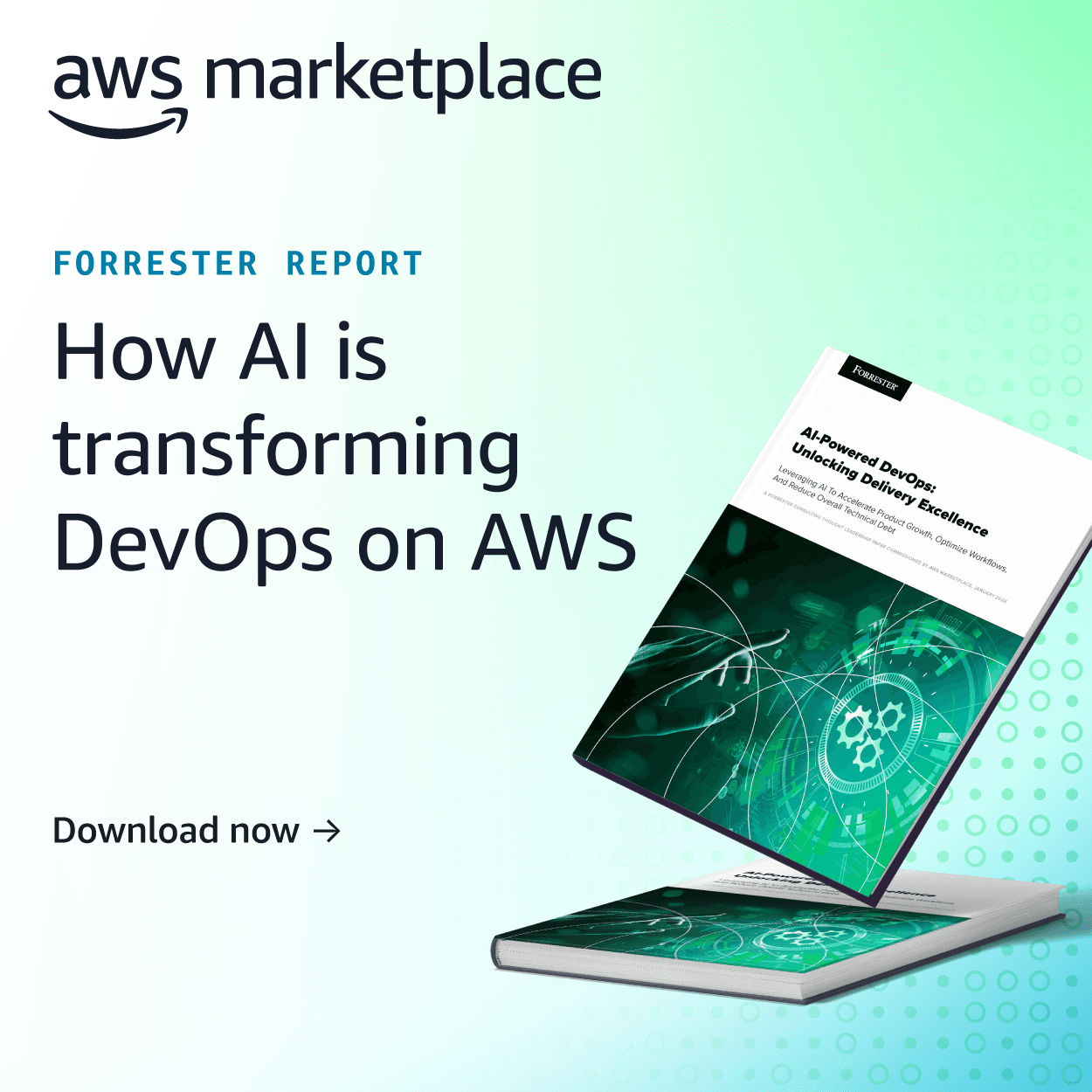 |
How AI is transforming DevOps on AWS DevOps teams are under pressure to deliver faster while managing growing complexity, costs, and security demands. Yet many still spend the majority of their time on repetitive tasks that slow innovation and increase risk.
This Forrester Consulting study, commissioned by AWS Marketplace, explores how organizations are using AI to automate workflows, improve CI/CD efficiency, and reduce technical debt.
Learn where AI is delivering the greatest impact and how to apply it. |
| Download this AI study now |
|
|
🔖 The Reading Room Articles we have hand-picked for you: |
|
|
When "idle" isn't idle: how a Linux kernel optimization became a QUIC bug Cloudflare's quiche integration test was failing 61% of the time. CUBIC's congestion window was pinning at the two-packet minimum and oscillating between recovery and congestion avoidance 999 times in 6.7 seconds, one transition per RTT. The root cause: a 2017 Linux kernel optimization for idle TCP connections, faithfully ported to quiche in 2020, that confuses normal pipeline delays with idleness at minimum cwnd. The fix was one line of logic. Finding it took weeks of qlog instrumentation. Worth reading even if you never touch a CCA in your life, because the debugging mindset transfers everywhere. By Esteban Carisimo and Antonio Vicente → |
|
Why I'm leaving GitHub for Forgejo Not about outages. About ownership. On April 27, the Dutch government soft-launched code.overheid.nl on self-hosted Forgejo, picking it over GitLab because it has no open-core split. The week before, Jorijn Schrijvershof did the same with his own code. The piece walks through the structural reasons: GitHub has no CEO since August 2025, the Copilot training-data default flipped on April 24 so interactions are now used for training unless users opt out, and FISA 702 plus the CLOUD Act mean EU data residency is comfort, not a fix. The runner architecture section alone, with KVM isolation, gVisor, weekly destructive rebuilds, and an nftables egress filter, is worth the read for anyone running CI. By Jorijn Schrijvershof → |
|
Why Giant IN Clauses Slow Down Your App Your indexes are perfect, CPU is healthy, but p99 latency is spiking on an IN clause that fetches a few thousand IDs. The hidden problem is planning time. PostgreSQL's parser tokenizes every constant in the list, assigns types to each one, and builds a tree node per item, which breaks plan caching. Switching to ANY(ARRAY[]) wraps the whole list in a single parameter, so the parser sees one int[] and skips straight to planning. The walkthrough shows how to spot the symptom with EXPLAIN ANALYZE (planning time over 50% of total is the giveaway), and reports planning time dropping from 40+ ms to under 2 ms in high-volume environments. ORMs are the primary culprit, so the audit list at the end is useful too. By Jake Hertz → |
|
Always Be Blaming Alex Kladov (matklad) on why most engineers read code in 2D and how to read it in 4D instead. The argument: code is Markov, not memoryless. The shape at time T depends on the shape at time T minus one, so understanding a snippet means understanding its history. He walks through the exact GitHub keyboard workflow he used for years (y to anchor the URL to a commit hash, b to toggle blame, click "blame prior to change", cmd-click commits to fan out) and his local replacement: a hydra of shortcuts that runs git blame on the current line, then git switch --detach to that commit, in a dedicated worktree, so the LSP and your build system keep working as you time-travel. By Alex Kladov → |
|
The Emacsification of Software Thomas Ptacek was tired of bad Markdown viewers, so he built a better native macOS one in 30 minutes of interactive time with Claude. The point of the post is not the app. The point is that AI agents have collapsed the cost of building real native UI, so personal software is becoming a thing again, the same way Emacs lifers have always built whole applications in elisp to scratch personal itches. Sharp argument that what matters now is the prompts, not the source code, and that nerd software is about to get a lot more interesting. Comes with a BPFUI gist that visualizes bpftrace output, just to prove the point. By Thomas Ptacek → |
|
|
|
|
|
|
🔗 The Link Lounge Unordered finds from around the web:
Find something cool? You can send us links to feature here via email. |
|
|
|
|
🧰 The Toolbox Tools and products we're excited about today: |
|
|
OpenCode v1.15.5 Open source AI coding agent available as a terminal interface, desktop app, or IDE extension. Connect any model from any provider (Claude, GPT, Gemini, GitHub Copilot, ChatGPT Plus/Pro, or 75+ providers through Models.dev), or use the free models included. v1.15.5 (May 18) adds an experimental native OpenAI runtime path, --replay flags to show recent history on resume, and faster large session timelines in the desktop app. Built for privacy: OpenCode does not store your code or context data. 162K GitHub stars, used by 7.5M developers per month. Learn more → |
|
DeepClaude A small bash and PowerShell shim that retargets Claude Code at DeepSeek by setting the ANTHROPIC_BASE_URL, ANTHROPIC_AUTH_TOKEN, and per-tier model environment variables. Same agent loop, same file tools, same subagents, around 17x lower model cost on the Max 20x plan. Five dollars of DeepSeek credit gets you started. Caveats worth knowing: no image input, no MCP server passthrough, parallel tool calls disabled, and the DeepSeek API does not let you opt out of training. Useful for non-confidential feature work and bug fixes. Learn more → |
|
Ardent Git for your data infrastructure. Ardent replicates your production Postgres into a read replica, then lets you create isolated branches from that replica in under 6 seconds, each one a full Postgres database with your real data. Branches auto-suspend after 5 minutes of inactivity and spin back up instantly on reconnect, and you only pay for changes made on the branch. The CLI mirrors git: branch create, switch, info, delete. Works with Supabase, AWS RDS, PlanetScale, or self-hosted Postgres. Useful for migration testing, agent database work, and replacing shared staging databases with one-off branches. Learn more → |
|
Traceway OpenTelemetry-native observability platform, MIT licensed, self-hosted in about 90 seconds. One docker compose up gets you logs, traces, metrics, exceptions, session replay (web and Flutter), and AI observability (LLM cost, tokens, latency, full conversations) on a single trace ID. Point any OTel SDK at OTLP/HTTP ingest and traces start flowing, no Collector or per-language vendor SDK required. Stack: Go 1.25, SvelteKit 2, ClickHouse or SQLite, PostgreSQL. There is also an embedded mode that runs Traceway inside your Go process with SQLite, no Docker. Latest backend release v1.7.20 shipped May 12. Learn more → |
|
|
|
How AI is transforming DevOps on AWS
DevOps teams are under pressure to deliver faster while managing growing complexity, costs, and security demands. Yet many still spend the majority of their time on repetitive tasks that slow innovation and increase risk.
This Forrester Consulting study, commissioned by AWS Marketplace, explores how organizations are using AI to automate workflows, improve CI/CD efficiency, and reduce technical debt.
Learn where AI is delivering the greatest impact and how to apply it. Download this AI study now → |
|
|
|
🎤 Your Voice Your feedback shapes what comes next! We read every email, so simply hit reply and tell us what's on your mind. |
|
|
|
|
|
|