Welcome, Developers! 👋
This week explores web dependency management, why distributed system clocks never sync perfectly, and how even Linus is vibe coding now. Plus, how detailed specifications improve AI coding workflows and why the most essential work often goes unrecognized in teams. | | |
From our sponsor: Granola
| | | |
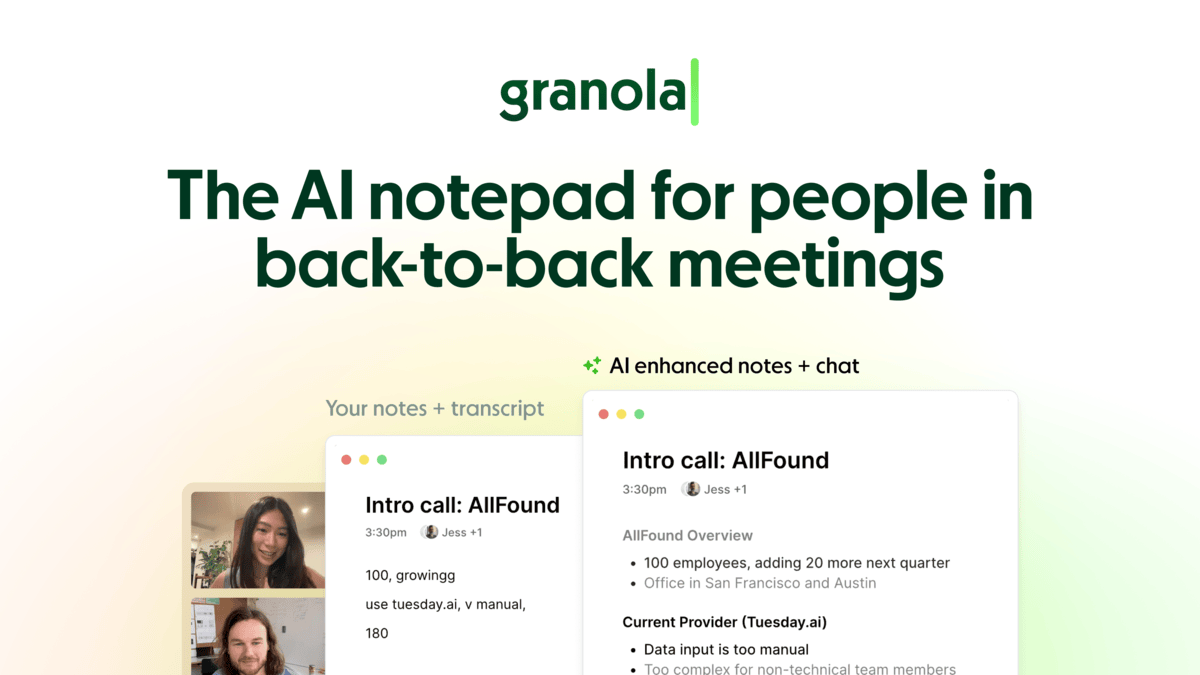
| Put your meetings to work
Stop losing insights in forgotten meeting notes. Granola is your AI notepad that captures conversations and makes them work for you.
Chat with your meetings, create custom prompts, and turn every discussion into clear decisions, follow-ups, and opportunities.
Get one month free with the code SITEPOINT. |
| Try Ganola | | | |
🔖 The Reading Room
Articles we have hand-picked for you: | | |
Web Dependencies Are Broken. Can We Fix Them?
JavaScript dependency management on the web platform has outsourced basic functionality to third-party bundlers, creating unnecessary complexity for developers. Unlike healthy ecosystems where dependencies are cheap and first-class, web developers face a usability cliff the moment they add their first library. While bundlers serve a purpose for optimization, requiring advanced tools for basic needs like code reuse shouldn't be the price of admission to web development.
By Lea Verou → | |
Clock Synchronization Is A Nightmare
Keeping clocks synchronized across distributed systems is deceptively complex. With no global clock, quartz crystal imperfections cause drift (up to 110 seconds/year from temperature changes), breaking everything from database transactions to build systems. Solutions range from simple NTP (millisecond accuracy) to Google's TrueTime with atomic clocks, but perfect synchronization remains impossible.
By Arpit Bhayani → | |
The P.E.R.F.E.C.T Code Review Principle
This guide introduces the PERFECT acronym (Purpose, Edge cases, Reliability, Form, Evidence, Clarity, Taste) to structure reviews by priority, from business logic validation to handling personal preferences. It prioritizes edge case verification as its second most important principle, right after confirming code solves its intended purpose.
By Daniil Bastrich → | |
My LLM Coding Workflow Going Into 2026
The most effective AI coding workflow starts with brainstorming detailed specifications and project plans before writing any code. This "waterfall in 15 minutes" approach means creating a comprehensive spec.md with requirements, architecture decisions, and testing strategy, then having a reasoning-capable model break it into logical tasks. This upfront investment prevents wasted cycles and keeps both human and AI aligned on what's being built and why.
By Addy Osmani → | |
The Invisible Work
Recognition flows to work that's easy to describe, not necessarily what's most essential. The person who coordinates stakeholders, writes strategy docs, and maintains project trackers often sees their contributions become invisible infrastructure. The best strategy isn't making this work more visible, but finding leaders who already understand its value.
By Hardik Pandya → | | |
| |
| |
🔗 The Link Lounge Unordered finds from around the web:
Find something cool? You can send us links to feature here via email. | | | | | |
🧰 The Toolbox
Tools and products we're excited about today: | | | |
memlab
memlab analyzes JavaScript heap memory and finds leaks in browsers and Node.js. Define E2E test scenarios, run CLI commands, or use the programming API to detect memory issues. Learn more → | |
Ohm
Ohm is a JavaScript library for building parsers, interpreters, and compilers. It uses parsing expression grammars (PEGs) with a domain-specific language. Features include left recursion support, modular semantic actions, and an interactive online editor with visualization. Learn more → | |
FracturedJson
FracturedJson formats JSON to be human-readable yet compact. Objects and arrays stay inline when simple. Similar structures align like tables. Available as .NET library, JavaScript package, VS Code extension. Learn more → | |
Quick Markdown Search
QMD is a local search engine for markdown notes and docs. It combines BM25, vector search, and LLM re-ranking. Runs entirely on-device using GGUF models, ideal for AI agents. Learn more → |
| | |
Put your meetings to work
Stop losing insights in forgotten meeting notes. Granola is your AI notepad that captures conversations and makes them work for you.
Chat with your meetings, create custom prompts, and turn every discussion into clear decisions, follow-ups, and opportunities.
Get one month free with the code SITEPOINT. Try Ganola → |
| | |
🎤 Your Voice Your feedback shapes what comes next! We read every email, so simply hit reply and tell us what's on your mind.
| | | | | |
|