Safari's masonry layouts, React benchmarks reveal complexity cliff, plus Claude Code manages $100k. Also: why design needs hands-on experience, traditional logging is broken, and smarter command-line tools for your workflow

View in browser | Past Issue | Subscribe / Unsubscribe

SitePoint Source

Welcome, Developers! đź‘‹

Featured this week: CSS Grid Lanes bringing masonry layouts to Safari, benchmarking AI's true React coding abilities, Claude Code autonomously trading options for a month, why good software design demands hands-on experience, and the structural problems plaguing traditional logging.

From our sponsor: Codemetrics

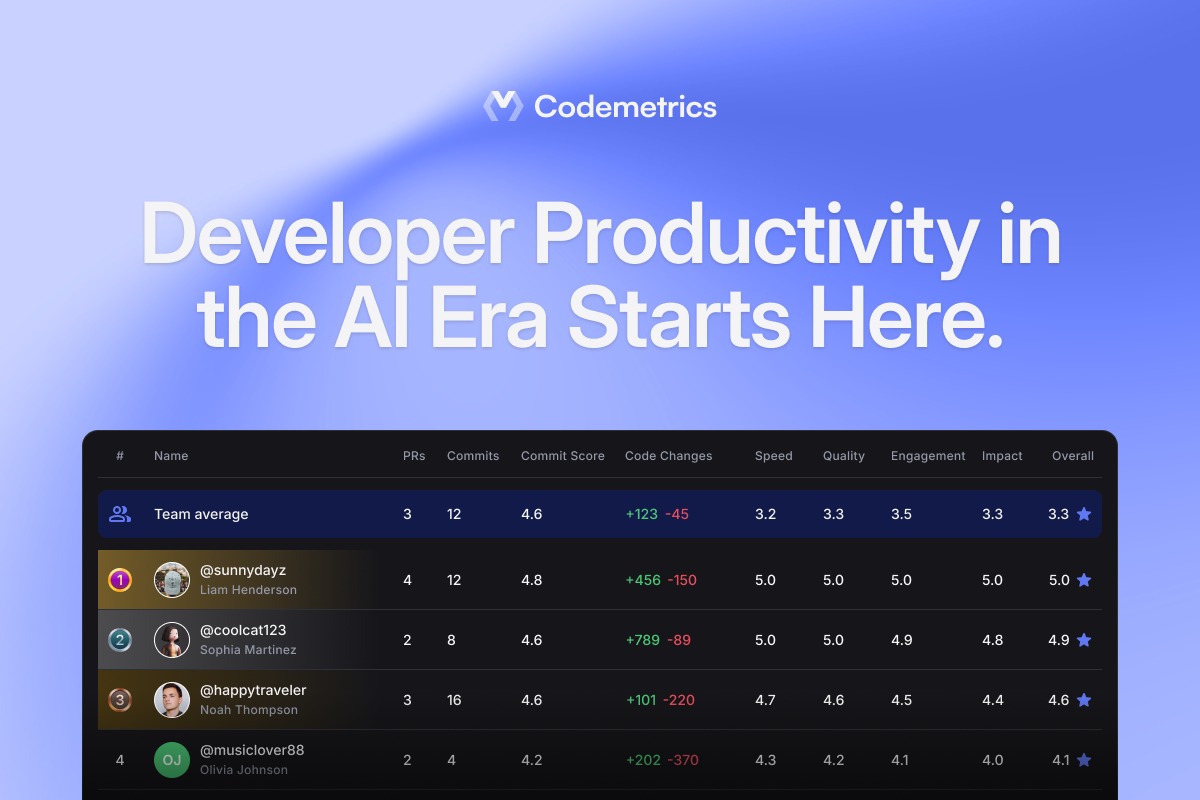
What does your code say about your team?

Codemetrics analyzes real code—not standups, not self-reports—to surface who’s shipping high-quality work and where teams are slowing down. If you manage engineers and want signal over noise, this is worth a click.

Try for free

đź”– The Reading Room

Articles we have hand-picked for you:

CSS Grid Lanes Are Here!

WebKit introduces Grid Lanes, a new approach to masonry layouts on the web. Using simple syntax like display: grid-lanes, developers can create flexible, responsive layouts without media queries. Available now in Safari Technology Preview 234, this combines CSS Grid with intelligent item placement algorithms.

By Jen Simmons, Brandon Stewart, and Elika Etemad →

How Good Is AI at Coding React (Really)?

AI coding benchmarks reveal models excel at isolated React tasks (~40% success), but drop to ~25% on multi-step integrations due to a "complexity cliff." The gap between helpful AI and messy output comes down to context engineering and explicit constraints. Deep React knowledge lets you guide AI effectively without blindly accepting output.

By Addy Osmani →

I gave Claude Code 100k to trade with for a month

An AI trading experiment used LEAPS foundation positions, intraday scalping on 0-5 DTE options, and active hedging across both market directions. Initially designed with CEO, consultant, and strategy agents, the system eventually simplified to just Claude Code with minimal instructions. Best single trade netted +$14,578 on overnight puts during Fed week volatility.

By Jake Nesler →

You can't design software you don't work on

Only engineers actively working on a large software system can meaningfully participate in design decisions. Generic software design advice is typically useless for practical problems because good design requires intimate understanding of concrete system details. Real design discussions revolve around arcane specifics like which subsystem can access what information, not philosophical debates about DRY versus WET principles.

By Sean Goedecke →

Logging sucks

Traditional logging is fundamentally broken. A single request generates 17+ scattered log lines across services, making debugging nearly impossible. String search treats logs as bags of characters with no understanding of structure or relationships. When issues arise, you're left grep-ing through millions of lines hoping to find context that isn't there.

By Boris Tane →

⏳ Back in Time

Most clicks from last newsletter:

đź”— The Link Lounge 

Unordered finds from around the web:

Find something cool? You can send us links to feature here via email.

đź§° The Toolbox

Tools and products we're excited about today:

zoxide

zoxide is a smarter cd command. It remembers your frequently used directories. Navigate quickly using z with fuzzy matching. Works cross-platform on all shells.

Learn more →

watchexec

watchexec automatically runs commands when files change. It watches directories for modifications and executes specified commands. Perfect for automating repetitive development tasks like running tests, rebuilding artifacts, or restarting servers across platforms.

Learn more →

textarea

textarea.my is a minimalist browser-based text editor. It stores content in the URL hash using deflate compression. You can share notes by simply copying and sharing the URL.

Learn more →

Continuous Claude v2

Continuous Claude prevents Claude Code context degradation by saving state to ledgers instead of compacting. It uses hooks to preserve session continuity, execute MCP tools without token waste, and orchestrate agents with fresh context. Includes TDD workflow, code quality tools, and Braintrust tracing.

Learn more →

What does your code say about your team?

Codemetrics analyzes real code—not standups, not self-reports—to surface who’s shipping high-quality work and where teams are slowing down. If you manage engineers and want signal over noise, this is worth a click.

Try for free

🎤 Your Voice

Your feedback shapes what comes next! We read every email, so simply hit reply and tell us what's on your mind.